
Home / Exterior Detailing / How to Remove Tree Sap From a Car
HOW-TO GUIDE
How to Remove Tree Sap From a Car
Tree sap is resin. Fresh spots can often be dissolved; baked spots need patience, not a fingernail. This page stays on sap only: shade, soak, paint-safe remover per the label, then wash. It is not a clay-bar tutorial, not bird-dropping advice, and not a scratch-repair guide.
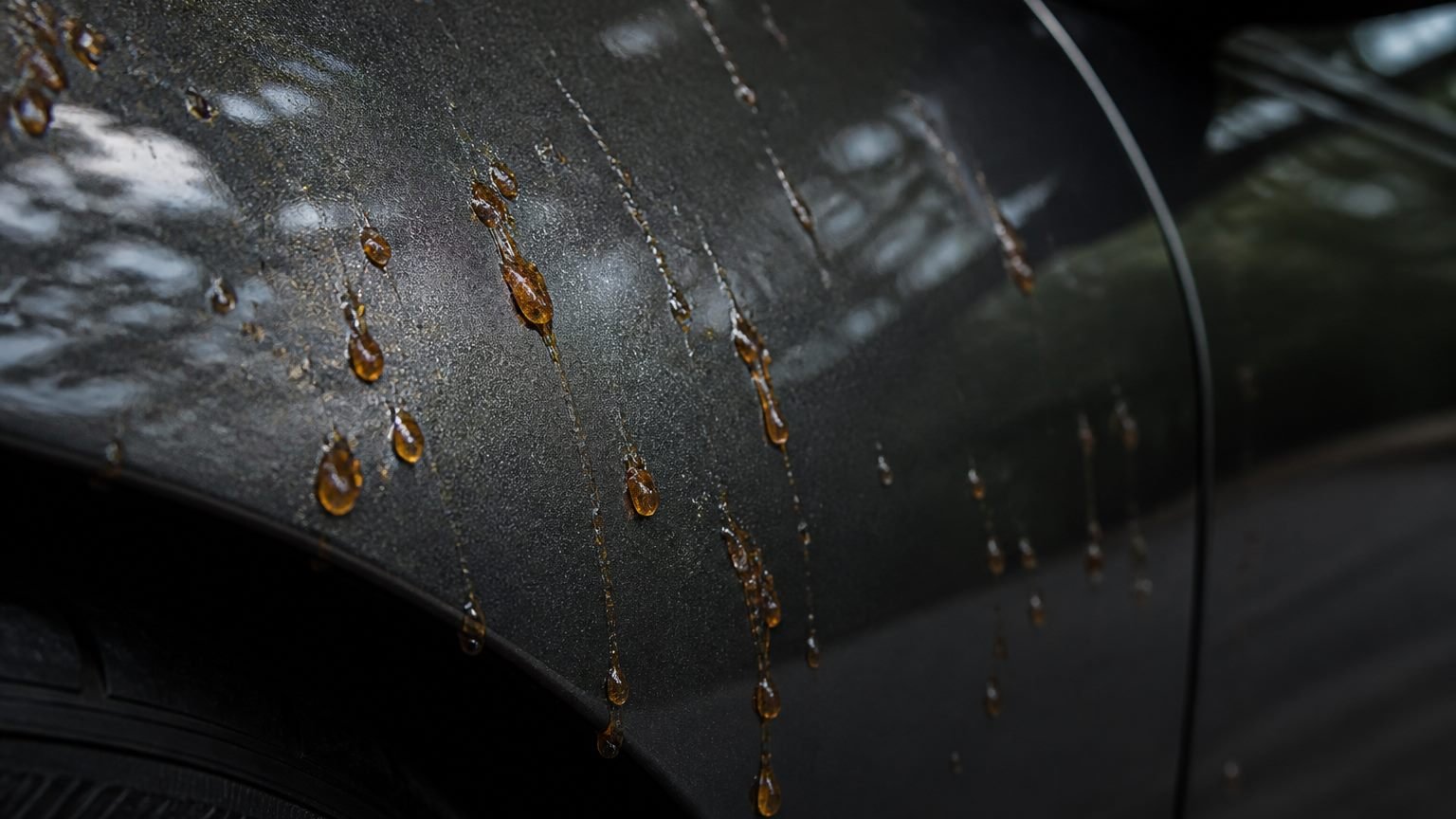
Editorial illustration. Not an original process photo and not proof that ProTaskser tested this panel.
What sap does on paint
Tree sap is plant resin. Fresh sap is tacky. Heat and time turn it into a hard, glossy bead that can glue itself to clear coat. Toyota’s appearance-care notes (checked 24 August 2026) say tree sap will harden and adhere; if you scratch hardened sap off, paint can come with it. They recommend a soft sponge and water or a commercially available chemical cleaner, and they describe a damp-newspaper compress for one to two hours as another loosening method, followed by a water rinse. Honda’s exterior-care notes (same check date) group tree sap with bird droppings, insects, and tar as reasons to wash more often, and they warn that chemical solvents and strong cleaners can damage paint, metal, and plastic.
That OEM pair is the safety rail for this page: loosen, do not pick; prefer water and labeled cleaners; do not treat sap like a scab. Detailing brands sell bug-and-tar or sap-capable solvents that list painted surfaces. Chemical Guys’ bugs-and-tar how-to (updated 2 July 2026, checked 24 August 2026) includes sap as a soil their bug-and-tar chemistry can attack, still under a labeled dwell and a rinse. This article will not copy a mixing ratio from one brand and pretend it is universal. If you use a solvent, the bottle in your hand is the process.
Scope: sap only
This guide covers tree sap on painted bodywork. It is not a clay-bar procedure, not a scratch-repair guide, and not a combined “all contaminants” mega-article. Bird droppings and bugs/tar have their own live how-tos: how to remove bird droppings safely and how to remove bugs and tar from car paint. For the category map, use the Exterior Detailing hub, the complete car detailing guide, and the paint decontamination overview.
Fresh sap versus baked sap
Fresh sap still looks wet or stringy. Water, a soak, and a labeled cleaner have a better chance. Baked sap looks like hard candy or a raised amber chip. Toyota’s warning is aimed at that state: mechanical picking is how clear coat tears. Baked sap needs longer wetting or a labeled solvent pass, then another wet wipe, not a keycap or a plastic scraper used as a chisel.
You will not always know how old a spot is. Treat unknown spots as baked: soak first, then escalate only with paint-labeled chemistry.
How to remove tree sap from car paint
- Shade and cool panels. Hot paint makes sap smear and makes solvents flash. Wait until the metal is not hot to the touch.
- Rinse grit away. Dust on a sticky bead becomes sandpaper the moment you wipe. A hose rinse around the spot is the first control.
- Try water and time first. For fresh sap, a wet microfiber compress — the same idea as Toyota’s damp-newspaper soak — can swell the resin. Keep it wet. Do not set a kitchen timer as if it were a medical protocol; one to two hours is Toyota’s newspaper example, not a law of physics for every tree. Check, re-wet, and do not let a dry cloth bake onto the bead.
- Lift, do not chisel. When the sap slumps or looks glossy-soft, wipe with a wet microfiber in a short pass. Fold to a clean face. If it still feels like a rock, soak again. This is the step where fingernails cost clear coat.
- Escalate only with a paint-labeled cleaner. If water stalls, use a commercially available cleaner whose label lists painted exteriors — Toyota’s second option. Bug-and-tar removers are sometimes also sold for sap; only use them that way if sap or “tree resin” appears on the label, and only for the dwell printed there. Honda’s solvent warning still applies: strong unmarked chemicals are not a loophole.
- Wash the patch. After the bead is gone, wash that panel with car-wash soap at the soap’s labeled dilution so residue is not left as a smear.
- Inspect in shade. Smooth paint and no amber left means you are done with sap removal. A dull crater or torn edge is damage, not leftover sap.
What not to use
- Dry picking, credit cards used as scrapers, razor blades on paint.
- Gasoline, paint thinner, acetone, or other unmarked household solvents. Honda’s appearance-care pages already flag chemical solvents as a paint risk.
- Kitchen abrasives. They are designed to cut enamel off dishes, not to spare automotive clear coat.
- Turning this page into a clay how-to. If the panel still feels rough after the sap bead is gone, that is other contamination. Read the decontamination overview instead.
Aftercare
Solvent-style removers can thin wax on the spots you treated. A small amount of the protection you already use — wax, sealant, or spray sealant — on a clean, dry patch is reasonable. Differences between those products belong on wax, sealant, and ceramic-spray basics. This sap page will not claim a coating makes trees safe to park under.
When sap has already marked the clear coat
Sometimes the amber bead comes off and a dull or slightly dented spot remains. That is not a failure to “soap harder.” Resin and UV can disturb the surface while the sap sat there. More folklore solvent will not pour clear coat back. Stop. This page’s job ended when the sap left. Correction, if anyone does it, is a separate topic and is not covered here as a DIY polish recipe.
Parking and prevention without magic claims
The only prevention that does not require a product pitch is parking: less time under dripping species means fewer beads. A maintained wax or sealant layer can make wash-off easier; Honda describes wax as protection against environmental soils. It is not a guarantee that sap will slide off a coated car in a heat wave. If you already wax, keep doing it as part of normal care, not as a sap-specific miracle.
When to stop
- The bead is gone and the paint looks torn, milky, or cratered.
- Color on the towel looks like paint, not resin.
- You are considering a blade, a drill pad, or a bottle that does not list automotive paint.
- Wrap or PPF is under the sap and the cleaner does not list that surface.
A professional with lighting can often finish baked sap that a driveway fingernail would destroy. Walking away is a valid outcome.
Common mistakes
Picking at a hard bead is the expensive mistake Toyota already described: paint can come off with the sap. The second mistake is using a dry paper towel on a dusty, sticky fender. You will grind bark grit sideways. The third is treating every amber speck as a clay-bar emergency. Clay is a separate topic. If the bead is gone and the panel still feels rough elsewhere, that is a decontamination question — not an excuse to invent a clay tutorial in this sap guide.
A fourth mistake is coating over sap. Wax on top of resin hides the bead until summer heat re-softens it, then you have sap plus gummed coating. Remove first, then re-protect.
FAQ
Will hand soap or cooking oil work? This page will not recommend kitchen chemistry. OEM care pages point to water, a soft sponge, and commercially available cleaners. Oil films also have to be washed off later and can spread grit.
Is isopropyl alcohol required? No. Some detailers use IPA as a wipe-down in other processes. Honda’s solvent caution is a reason not to treat high-strength alcohol as a default sap recipe. If a paint-labeled product happens to include alcohol, that is the manufacturer’s formula, not a homemade mix.
Can I clay sap off? Clay is for bonded contaminants after a wash, covered as a separate topic. Do not treat this sap article as a clay lesson, and do not assume clay is safe on a hard, un-softened bead.
Does shade parking ruin a coating? No coating claim on this page. Shade under the wrong tree increases sap hits. Coatings are discussed at a high level on the wax and sealant page, not sold here as a tree shield.
Is this a local sap-removal shop page? No. It is a DIY how-to for people searching how to get tree sap off a car. ProTaskser is not listing installers.
What to do next
If sap was one bead on an otherwise dirty car, wash the rest of the vehicle properly after the spot is gone. If the next mess is droppings or bug splatter, use those dedicated pages instead of stretching sap advice. Keep this guide for resin only.