
Home / Exterior Detailing / How to Remove Bird Droppings Safely
HOW-TO GUIDE
How to Remove Bird Droppings Safely
Bird droppings are acidic and often gritty. The safe move is to soak and lift, not to grind a dry splat across clear coat. This page covers removal and what a remaining dull ring can mean. It does not claim that cleaning reverses etching, and it is not a scratch-repair article.
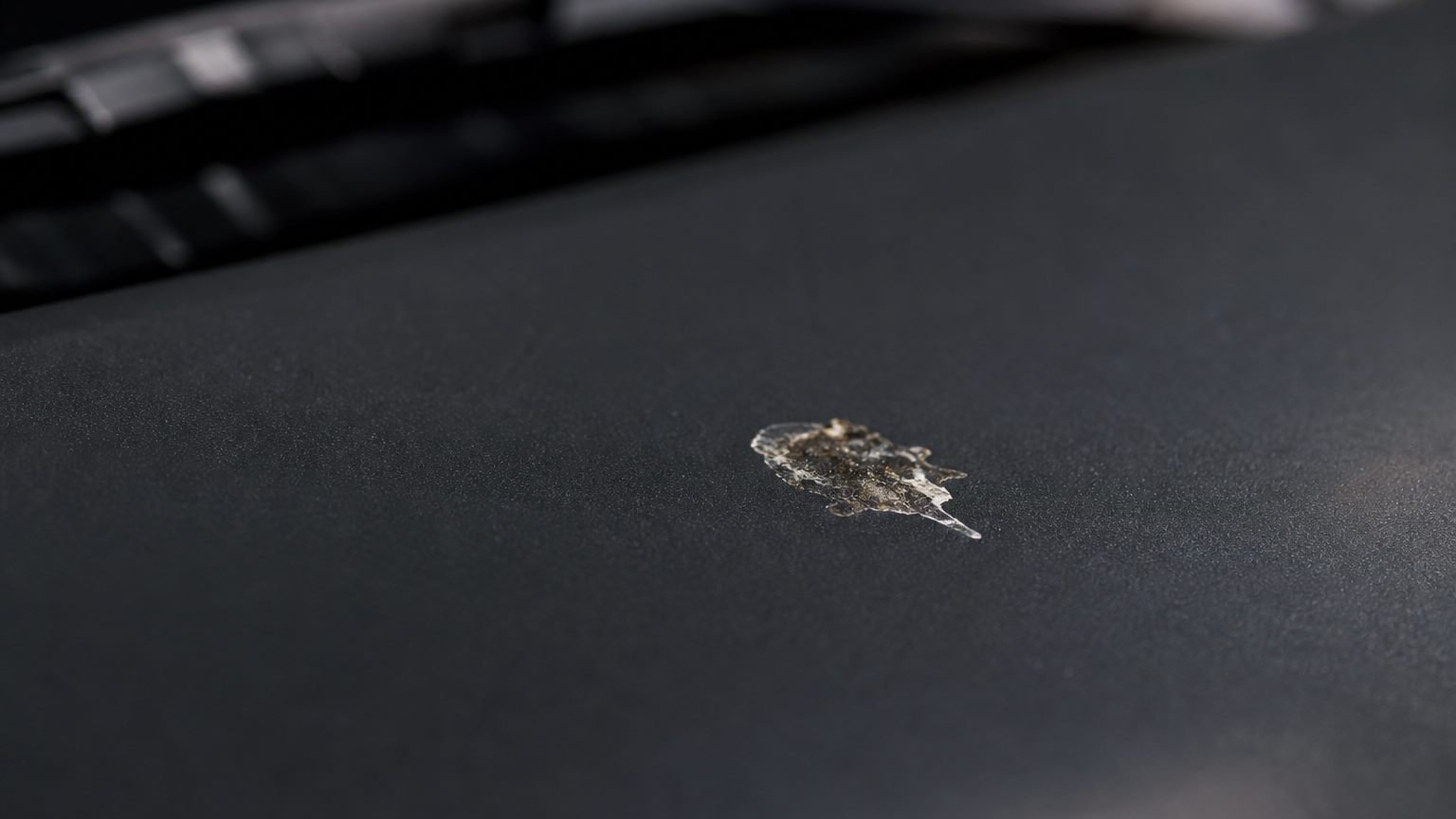
Editorial illustration. Not an original process photo and not proof that ProTaskser tested this hood.
Why droppings mark paint
Bird droppings combine uric acid with grit from digested solids. Honda’s exterior-care notes (Civic/CR-V appearance pages, checked 24 August 2026) list bird droppings with tar, insects, and sap as soils that justify more frequent washing, and they warn that harsh solvents can damage paint and plastic. Toyota’s appearance-care notes (checked the same day) say bird droppings should be cleaned off with a soft sponge and water; if you are traveling, a damp tissue is an emergency stand-in, and the cleaned area should be waxed afterward. Those OEM lines are about prompt, gentle removal. They do not publish a universal “safe minutes before permanent etch” clock, and this page will not invent one.
Detailing educators describe the same mechanical risk: wiping a dry splat drags grit. Jim’s Car Detailing (Australia) tells readers to rehydrate first and dab, not circular-scrub. Independent how-tos such as Reflections Detailing’s bird-dropping guide (checked 24 August 2026) use a soaked microfiber compress on dried messes, then lift. Dr. Beasley’s public correction demos treat a remaining ring after the dropping is gone as possible clear-coat deformation — a polishing or sanding problem, not a second wash. This article stops at removal and honest inspection. It will not teach machine polishing.
Scope
This guide covers only bird droppings on painted bodywork. It is not tree sap, not bugs and tar, and not a scratch-repair guide. Related how-tos cover the other contaminants. For the wider process, use the Exterior Detailing hub, the complete car detailing guide, and the paint decontamination overview. Bugs and tar are a separate live how-to at how to remove bugs and tar from car paint.
What you need
- Shade and a panel that is not hot.
- Water, a pH-neutral car-wash mix at the soap’s labeled dilution, or a paint-safe quick detailer. OEM pages lead with water and a soft sponge. Quick detailer is a convenience, not a requirement.
- Clean microfiber towels you can fold to a new face.
- Optional: a labeled bird-dropping or all-purpose paint cleaner if water stalls. The label must list painted exterior surfaces.
Do not use dry kitchen roll as a scrubber. Do not use vinegar, scouring powder, or dish soap as a “hack.” Those are not in the OEM appearance-care pages above, and abrasives plus acid are the opposite of a soak-and-lift.
How to remove bird droppings from car paint
Work cool. Heat dries the splat into a crust and speeds chemistry you cannot see. If the hood is hot, wait or move the car.
- Flood, do not grind. Soak the dropping with water or a sudsy mix. Toyota’s sponge-and-water instruction is the baseline. If you only have a travel bottle of paint-safe detailer, saturate the spot rather than wiping it dry.
- Give it time to swell. Fresh droppings often release in seconds once wet. Dried ones need a compress: a folded microfiber soaked in water or suds, laid on the spot, kept wet. Independent how-tos often mention several minutes. This page will not declare a medical-style countdown. If the cloth dries, re-wet it. You are rehydrating, not cooking the paint.
- Lift straight up. Use a wet microfiber, dab and lift. Fold to a clean face. If you feel grit, add water. Circular dry wiping is how grit becomes swirls.
- Repeat instead of scraping. If a white or grey cap remains, soak again. Fingernails, plastic cards, and razor blades are out. Toyota’s sap warning — hardened material can take paint with it — is a useful attitude here too.
- Rinse and wash the patch. Once the solid is gone, rinse, then a light contact wash on that panel so acid film is not left behind.
- Dry and look. Use shade. A clean, glossy patch means removal worked. A dull ring or wrinkled outline after the dropping is gone is not “more dropping.” That is the inspection point below.
Fresh versus dried
Fresh droppings are still soft. Water and a lift often finish the job. Dried droppings are a crust glued to clear coat. They need more soak cycles, not more pressure. Parking under roosts makes dried examples more common; the method does not change, only the number of wet passes.
After it is gone: staining versus etching
A faint mark that wipes off with a paint-safe detailer is residue. A mark that remains after the surface is clean and dry may be etching: the clear coat’s texture or thickness has changed. Dr. Beasley’s correction material treats that as a leveling problem. This article will not walk through pads, compounds, or grit sequences. Saying “just polish it out” without paint-thickness context is how people burn through clear.
Honest next step if a ring remains: stop cleaning, photograph the mark in shade, and decide later whether a professional correction visit is worth it. Removing the dropping still mattered. Acids left sitting do more harm than acids you already lifted. Removal does not promise a factory gloss return.
Re-wax the spot
Toyota’s bird-dropping note says to wax the cleaned area. Honda treats wax as the sacrificial layer against fallout. After the panel is clean and dry, a small amount of the wax or sealant you already use on the car is reasonable. How those products differ is on our wax and sealant basics page. This dropping article will not sell a coating as a miracle bird shield.
When to stop
- The dropping is gone and a dull or wrinkled ring remains. More soaking will not rebuild clear coat.
- Color comes off on the towel in a way that looks like paint, not dropping.
- You are about to use a blade, a magic eraser, or household acid.
- The panel is in direct sun and every wet pass flashes dry before you can lift.
Move the car, cool the panel, or hand the job to someone with lighting and thickness context. Do not “just hit it with compound” because a video said rings always polish out.
A leftover ring after a clean, dry panel is the inspection point, not a cue to scrub again. If the dropping is gone and the paint looks dull or wrinkled, stop. That is no longer a sanitation problem. It may be clear-coat damage, which this page will not pretend to buff out on a phone tutorial.
Common mistakes
The usual failure is impatience. People see a white crust, get a dry tissue from the glovebox, and grind. That tissue often contains wood fibers. Combined with grit in the dropping, it is a cheap way to put spiderwebs into a hood you will notice every time the sun hits it. The second failure is over-chemistry: vinegar, bathroom limescale gel, or undiluted degreaser because it “cuts grease.” Honda already warns that strong cleaners can damage paint and plastic. If the bottle is for ovens or toilets, it is not a bird-dropping product.
The third failure is treating a remaining ring as unfinished cleaning. You can wash a dull crater until the cows come home. The dropping is already gone. What you are looking at may be the clear coat. That is frustrating. It is also the honest fork in the road: stop this how-to and treat it as a scratch-repair question.
FAQ
How fast do I need to act? OEM care pages say to remove droppings rather than leave them. They do not publish a guaranteed safe minute count for every climate and every paint. Sooner is better. This page will not fake a timer.
Can I use hand sanitizer or vinegar? Not as advice here. Honda warns that chemical solvents and strong cleaners can damage finishes. If a product is not labeled for automotive paint, skip it.
Will washing in an automatic tunnel fix it? Tunnel brushes can grind a dry splat. Soak and lift first. A tunnel is not a substitute for the compress method on a dried dropping.
What if I only have bottled water in a car park? Wet the dropping, wait, lift with a soft cloth or even a wet napkin used as a blotter, then wash properly at home. Toyota’s travel note is a damp tissue, not a scouring pad. Get real soap on it later the same day if you can.
Is this a local bird-dropping cleanup service page? No. It is a DIY method article for drivers who need to remove bird poop from car paint.
What to do next
Once the dropping is gone, look at the rest of the paint the same way you would after any spot incident: rinse grit off, then wash. If other bonded specks are bugs or tar, use the bugs-and-tar how-to rather than stretching this dropping article. Keep this guide for droppings only.