
Home / Exterior Detailing / How to Remove Bugs & Tar From Car Paint
HOW-TO GUIDE
How to Remove Bugs & Tar From Car Paint
Insect residue and road tar both stick to paint, but they are not the same mess. This page keeps them on one URL: soften bugs, use a labeled tar product for asphalt specks, then wash the residue. It is a DIY how-to, not a shop directory and not a clay-bar or scratch-repair guide.
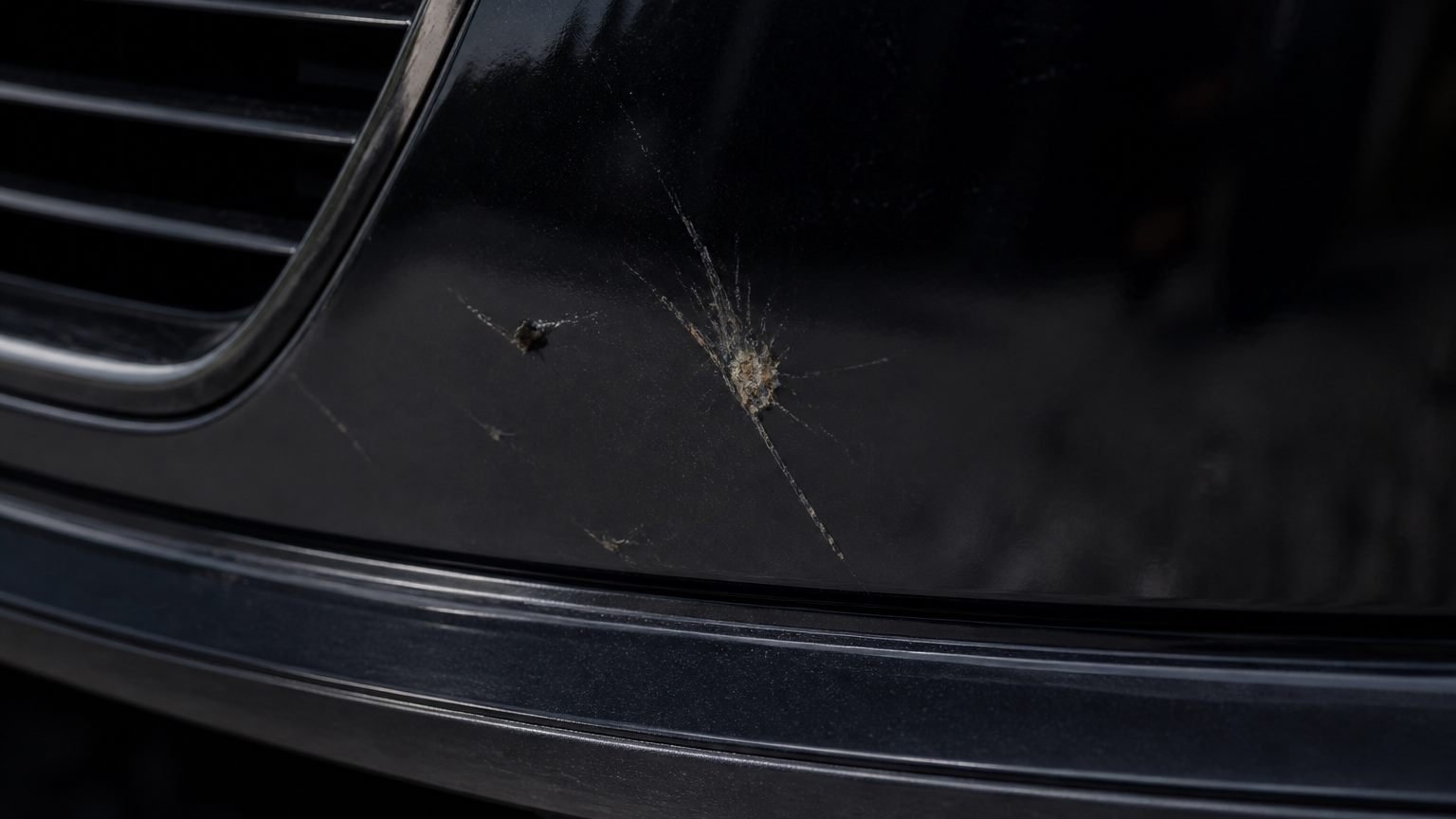
Editorial illustration. Not an original process photo and not proof that ProTaskser tested this bumper.
Bugs and tar are not the same job
Highway fronts collect protein-heavy insect residue. Lower sills, rocker panels, and the back of bumpers collect petroleum tar flicked up from fresh asphalt. Both can sit on clear coat. Both can be worse if you scrub them dry. They do not dissolve the same way, which is why this guide covers both removing bugs from car paint and removing tar from a car in one place.
Honda’s owner-manual exterior-care notes (Civic/CR-V style language, checked 24 August 2026) tell drivers to wash more often when tar, insects, bird droppings, or tree sap are stuck to painted surfaces, and they warn that chemical solvents and strong cleaners can damage paint, metal, and plastic. That is a maintenance reminder, not a recipe. Toyota’s appearance-care notes (Yaris-class manuals, same check date) say insects and tree sap are best removed with a soft sponge and water or a commercially available chemical cleaner, and they warn that picking at hardened material can take paint with it.
Brand how-tos agree on the outline, then diverge on mixing ratios. Chemical Guys’ “How to Remove Bugs and Tar from Your Vehicle” (page updated 2 July 2026, checked 24 August 2026) starts with a shaded pre-rinse, applies a dedicated bug-and-tar product, allows a short labeled dwell, wipes with a lubricated microfiber or mesh mitt in straight lines, then rinses and dries. Meguiar’s Bug & Tar Remover product copy (G1805 aerosol, checked the same day) describes cling foam meant to rehydrate stuck bugs and soften tar, used before a regular wash or as needed. Turtle Wax’s Bug & Tar Remover “How To Use” (checked the same day) is blunt: wash and dry first, spray until the stain is wet, let it penetrate, wipe with microfiber, then wax. Those are three labeled workflows, not one universal dwell time. If the bottle in your hand disagrees with a blog, the bottle wins.
What this page will not do
It will not teach a full clay-bar decontamination. That is a separate topic. It will not teach compounding, polishing, or scratch removal. If bug acids or tar solvents have already left a dull outline, cleaning the residue is still worth doing; making the outline disappear is paint correction, not tar removal. It will not recommend gasoline, paint thinner, acetone, or other household solvents on clear coat. Honda’s solvent warning is enough reason to skip that folklore.
For the wider wash-and-decontamination picture, use the Exterior Detailing hub, the complete car detailing guide, and the paint decontamination overview. After a solvent-style spot treatment, a thin layer of protection is often missing on that patch. High-level re-protection belongs with wax, sealant, and ceramic-spray basics — not a product ranking.
Gear that actually helps
You do not need a full studio. You do need shade, a cool panel, and products whose labels list painted exterior surfaces.
- Hose or pressure washer on a wide, paint-safe pattern for the pre-rinse. You are knocking grit off, not stripping paint.
- A dedicated bug and tar remover whose label names clear coat or painted bodywork. Some formulas are sold for bugs only, some for tar only, some for both. Read the panel list. Matte paint, vinyl wrap, and PPF often have extra limits.
- Several clean microfiber towels. Insect guts and tar should not share a towel with your drying towel.
- A wash bucket, car-wash soap mixed to the wash-soap label, and a wash mitt for the rinse-and-wash that follows.
- Nitrile gloves. Many tar removers are solvent-based even when they are sold as “paint safe.”
Skip dry paper towels, kitchen cream cleaners, and anything sold as a paint stripper. Skip “just a dab of fuel.” If a method is not on a vehicle-care label or an OEM appearance-care page, it does not belong here.
Prep: cool paint, shade, pre-rinse
- Park in the shade. If the bumper is hot to the touch, wait. Solvents flash off hot paint and leave you wiping half-dry product through grit.
- Rinse the nose, mirrors, and any tar-speckled lower panels with plenty of water. The goal is to float loose sand and shredded insect bits off the surface so the next wipe is not sanding.
- Look at what you actually have. Pale crusty dots on the bumper and hood leading edges are usually bugs. Black, glossy, slightly raised specks that smear brown-black on a towel are usually tar. You can have both on the same car after a summer motorway run.
How to remove bugs from car paint
Insect residue is organic. It responds to water, surfactant, and time more than to grinding. Chemical Guys’ current how-to (checked 24 August 2026) treats bug work as a pre-wash chemical step: wet the area, apply the labeled bug/tar product, wait the labeled window, then wipe with a lubricated mitt in straight passes and rinse. Meguiar’s G1805 copy describes foam that clings so the product can rehydrate stuck insects instead of you scraping them.
- With the panel still wet from the pre-rinse, apply the bug-capable product only where you see residue. Do not paint the whole car “just in case.”
- Wait for the dwell printed on that bottle. Do not invent a number because a different brand used 30 or 60 seconds. If the label says do not let it dry, do not let it dry.
- Wipe in short straight lines with a clean, wet microfiber or a sudsy mitt. Rotate to a clean face as soon as the cloth loads up. If a spot does not move, re-wet and repeat. Do not add fingernail pressure.
- Rinse that panel thoroughly so you are not washing solvent into the rest of the car later without noticing.
If the insect body is gone but a faint outline remains, stop. That outline may be etching in the clear coat. More bug remover will not fill missing clear. Further cutting is a correction decision, not a second round of tar solvent.
How to remove tar from car paint
Tar is sticky petroleum. Water alone rarely lifts it. Dedicated removers are built to dissolve that film so you can wipe it, then wash the oily leftover. Turtle Wax’s current Bug & Tar “How To Use” (checked 24 August 2026) wants the car washed and dried first, then product sprayed until the stain is wet, then a penetrate step, then a microfiber wipe, then wax. Chemical Guys’ how-to instead chemical-treats before the full wash. Both can be right for their own formulas. Match the sequence to the label in your hand.
- Confirm the speck is tar, not a paint chip. Tar often sits on top of the gloss and smears. A chip has a ragged edge and color change that does not smear.
- Apply a tar-capable, paint-labeled product to the speck. On lower panels, work a small zone so product does not run onto hot exhaust or unpainted rubber the label forbids.
- Allow only the labeled dwell. If the product says wipe while wet, wipe while wet.
- Use a clean microfiber and light pressure. Fold often. Tar transferred onto a dirty towel will redeposit as brown streaks.
- If a speck remains, apply a second labeled pass. Two light passes beat one aggressive grind.
Do not chase tar into a clay session on this page. Clay can pick up leftover tar, but clay technique is a separate topic, and this guide is not a substitute for it.
Wash the residue, then inspect
Whatever sequence the label used, finish with a normal, lubricated wash on the treated panels so solvent residue and loosened grit are not left as a film. Dry with a clean towel. Inspect in shade:
- If the surface is smooth and the specks are gone, you are done with removal.
- If tar smears remain, repeat a labeled pass on those dots only.
- If the paint looks dull, stained, or outlined where the bug sat, the contaminant may be gone and the clear coat may be marked. Cleaning is finished. Correction is a different job.
Re-protection at a high level
Bug removers and tar solvents can thin or remove wax on the spots you treated. Honda’s exterior-care pages treat wax as the layer that stands between paint and fallout. After the panel is clean and dry, a paint-safe wax, sealant, or spray sealant on that area is reasonable. Product choice and how those coatings differ is covered in our wax, sealant, and spray guide. This page will not rank brands or claim a ceramic coating is required to survive insects.
When to stop
- The panel is hot, the product is flashing dry, and you are tempted to scrub harder.
- You are about to reach for fuel, brake cleaner, or acetone.
- Wrap, PPF, or matte film is under the speck and the tar product does not list that surface.
- You see color on the towel that looks like paint, not brown tar.
Those are stop conditions. A detailer with paint-safe solvents and lighting can often finish what a driveway pass should not force.
FAQ
Can I use the same product for bugs and tar? Only if that product’s label lists both. Combination “bug and tar” removers exist (Meguiar’s G1805 and Turtle Wax Bug & Tar are sold that way). A bugs-only gel may not move asphalt specks. Read the panel.
Should I wash before or after tar remover? Follow the bottle. Some lines want a wash first so you are not grinding dirt. Others want chemical pre-treatment on a rinsed car, then the wash. There is no single internet rule that overrides the label.
Will this fix etched bug marks? No. Removal takes residue off. Etching is damage in the clear coat. This page stops at residue.
Is this a local bug-and-tar service page? No. ProTaskser is publishing a DIY method article. It is not a directory of mobile detailers.
What to do next
If insects and tar were the only bonded mess, wash the rest of the car the way you usually should: grit off first, then contact wash. If the paint still feels rough after these specks are gone, that roughness may be other contamination — read the decontamination overview rather than inventing a second tar article. Keep this guide for bugs and tar only.